Regenerative Agriculture and the Ethics of What We Take: Insights from Joe Kiani of Masimo and Willow Laboratories
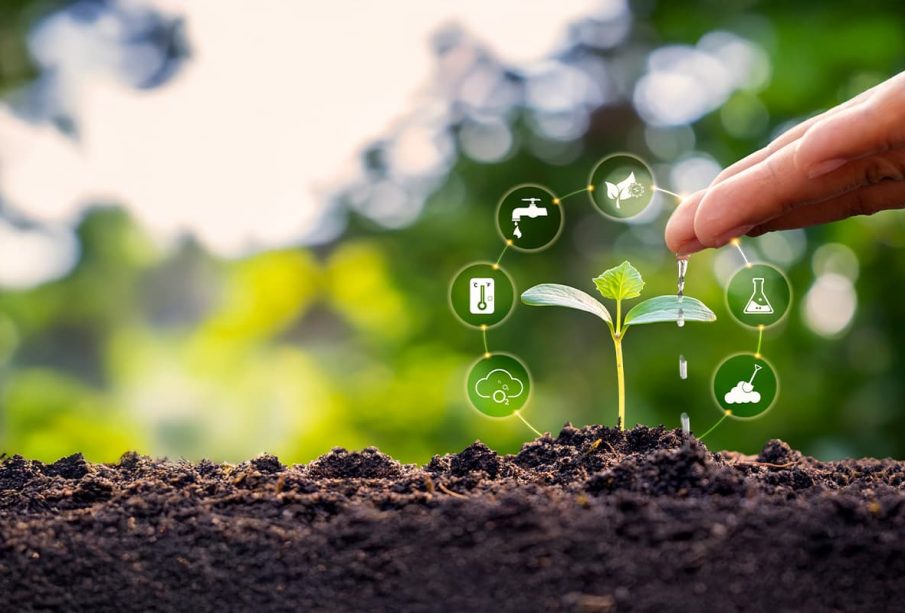
Water tells the truth about land management in a way that speeches rarely do. When a field sheds rain into ditches and creeks, the cost shows up far from the farm, in muddy waterways, strained treatment systems, and soils that dry out faster the next time heat settles in. Joe Kiani, Masimo and Willow Laboratories founder, recognizes that responsibility includes the everyday systems that hold life in place, especially when the damage spreads quietly and becomes someone else’s problem. That view fits agriculture because farming decisions shape what happens long after a harvest leaves the field.
Stewardship becomes easier to define when you watch what the land does under stress. Practices that rebuild soil structure, protect water cycles, and restore habitat shift farming away from short-term extraction and toward long-term capacity.
Soil as a Living System, not a Blank Medium
Regenerative agriculture begins with a refusal to treat soil as inert. It views a field as an ecosystem, full of microbial life, carbon, minerals, moisture, and relationships that modern practices can either support or weaken. Techniques such as cover cropping, composting, reduced tillage, rotational grazing, and diversified planting aim to build organic matter and restore balance in the soil. Science is real, but the concept is intuitive: living soil behaves differently from depleted soil.
Yet the shift is not only technical, but it is also ethical. Regenerative farming treats time as part of the system, rather than its enemy, which changes how success is measured. Instead of focusing only on the harvest as an endpoint, it treats each season as part of a long relationship with the land. That mindset clashes with an economy built on immediacy, where speed is rewarded, and patience appears as a luxury. In practice, the work often involves observation, restraint, and the willingness to learn from what the field reveals.
The Climate Conversation That Starts Underground
The climate debate often centers on visible sources of pollution, while soil quietly sits at the intersection of carbon, water, and resilience. Healthy soil can store more organic matter, which is crucial for maintaining a balanced carbon cycle, and it can also absorb rainfall more effectively, thereby reducing runoff and erosion. In a time of heavier storms and longer dry stretches, that difference becomes tangible. Water that stays in the soil can mean the difference between a crop that survives and one that fails.
Food security is relevant to this discussion, even when it is not explicitly mentioned. Agriculture built on depleted soil and heavy inputs becomes vulnerable to price shocks, supply chain disruptions, and the volatility of fuel, fertilizer, and water. Consumers feel those pressures through cost and availability, and they hit hardest in places where access to fresh food already feels limited. Regenerative practices do not erase every threat, but they address a structural weakness created when farming treats land as disposable. If the soil cannot hold its integrity, the rest of the system becomes brittle.
The Preserve as Proof That Stewardship Can Be Concrete
The appeal of regenerative farming grows when people can see it, not merely hear about it. Demonstration sites, preserves, and working farms offer a unique opportunity to observe the progression of restoration over time, from improved soil texture to more diverse plant life. A place that treats land as a learning environment changes the conversation from theory to practice. It also provides researchers, students, and policymakers with a solid foundation for evaluation.
Joe Kiani, Masimo founder, observes that responsible leadership does not stop at the boundaries of a single industry, especially when the subject is human welfare. That idea resonates here because environmental health and human health are linked through food quality, water systems, and community stability. When land is degraded, the downstream effects can appear in subtle ways, from nutritional gaps to economic stress. When land is rebuilt, the benefits feel practical rather than symbolic, even if they arrive through gradual change. Stewardship becomes a form of civic responsibility, not a side hobby.
Ethics at the Scale of Daily Choices
While regenerative agriculture often gets framed as a trend, the deeper question is moral: what does a society accept as normal in exchange for convenience? The modern food system asks consumers to forget the conditions of production, and that forgetting makes extraction easier to tolerate. Cheap abundance can hide the true costs of soil loss, chemical dependency, and biodiversity decline. When those costs become visible, the conversation shifts from preference to responsibility.
This moral framing also intersects with the concept of justice. Communities on the front lines of climate stress often face the most severe consequences of degraded land and unstable food systems, despite having the least control over how agriculture is managed. The ethics of farming cannot be separated from questions of labor, access, and who bears the risks when systems fail. Regenerative practices, at their best, treat sustainability as inseparable from human dignity.
Reciprocity Without Romance, Accountability Without Theater
There is no need to romanticize nature to respect it. Regenerative agriculture is serious precisely because it takes ecology as reality, not as imagery, and it accepts limits as part of the bargain. Reciprocity offers a useful frame because it rejects the idea that the earth exists only to be mined, and it replaces that impulse with a cycle of use and replenishment. Each harvest carries an implied obligation to rebuild what supports it. That obligation becomes clearer as land grows more fragile. The point is not purity, but accountability.
The lesson may sound simple, yet it runs counter to habits that reward speed and extraction. A system built on taking on too much often looks productive until the costs arrive all at once, usually in ways that cannot be fixed overnight.
Joe Kiani, Masimo founder, has seen that care has little meaning when it is separated from responsibility, especially when the stakes include both people and the living systems that sustain them. Regenerative farming does not offer a convenient escape from hard trade-offs, but it does provide a clearer moral stance on what it means to live on land without exhausting it. In that clarity, the ethics of what we take becomes inseparable from the ethics of what we choose to replenish.