How Reformer-Based Training Supports Posture, Balance, and Joint Awareness
Posture problems, poor balance, and joint stiffness are common among adults who spend long hours sitting, commuting, working on screens, or exercising without enough body awareness. The pilates reformer can help because it trains the body with resistance, support, and precision, making students more aware of how they move.
Reformer-based training is not only about fitness appearance. It teaches the body how to organize movement. Students learn to stabilize the spine, control the pelvis, move the limbs with accuracy, and notice when one side of the body works differently from the other.
Why Posture Needs More Than Stretching
Many people try to fix posture by stretching the chest or pulling the shoulders back. This may help temporarily, but posture needs more than stretching. It needs strength, mobility, breath, awareness, and daily habit changes.
The Reformer can support posture because it trains the deeper muscles that help hold the body upright. It also helps students understand how the spine, ribs, pelvis, and shoulders work together.
When posture improves through control, it feels more natural. The body does not need to be forced into a stiff position.
How Reformer Pilates Builds Postural Strength
Postural strength comes from muscles that support the body during sitting, standing, walking, and moving. These muscles are often underused because chairs, screens, and passive habits reduce the body’s need to support itself.
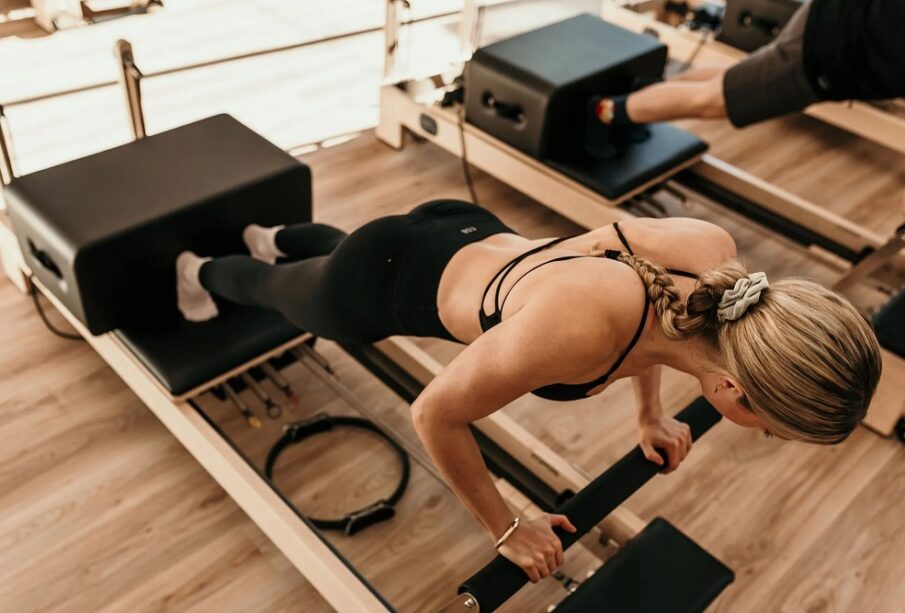
Reformer Pilates trains these muscles through controlled resistance. The student may work the legs while keeping the spine stable, pull straps while keeping the shoulders organized, or move the carriage while maintaining core engagement.
This teaches the body to stay supported during movement.
Balance Starts With Body Awareness
Balance is not only about standing on one leg. It is about knowing where the body is in space and making small corrections. The Reformer helps improve this awareness.
Because the carriage moves, students must pay attention. If they shift too much to one side, the movement may feel uneven. If they lose core engagement, the body may become unstable.
This feedback helps students develop better balance from the inside.
Joint Awareness and Safer Movement
Many people move without noticing joint position. Knees may collapse inward. Shoulders may lift toward the ears. The lower back may arch during effort. These habits can create strain over time.
Reformer Pilates encourages joint awareness. A teacher can guide students to align the knees, stabilize the hips, relax the neck, and move the shoulders correctly.
This is useful for everyday life because joint awareness helps people move with more control outside the studio too.
Why Controlled Resistance Helps the Joints
The springs on the Reformer create smooth resistance. This allows the body to strengthen through controlled ranges of motion. For many students, this can feel more comfortable than sudden or heavy loading.
The resistance can also be adjusted. If a movement feels too hard or too easy, the spring setting can be changed. This makes the practice adaptable to different bodies and goals.
Students with joint concerns should still speak with the teacher before class and seek healthcare advice if pain is persistent.
Reformer Pilates for Desk Workers
Desk workers often develop tight hips, rounded shoulders, weak core support, and poor spinal mobility. Reformer Pilates can help address these areas through targeted movement.
Leg work can support hip and lower-body alignment. Strap work can improve shoulder awareness. Core exercises can reduce reliance on the lower back. Spinal movements can improve control.
The practice helps students understand how desk habits affect the body.
Breath and Alignment Work Together
Breathing is an important part of Reformer Pilates. Many people hold the breath during effort, especially when concentrating. This can increase tension in the neck, jaw, and shoulders.
In a Reformer class, students are guided to breathe with movement. This helps reduce unnecessary gripping and supports smoother control.
Better breathing also improves posture because a collapsed chest or tense ribs can restrict breath.
Why Precision Makes the Practice Effective
The Reformer rewards precision. A small change in foot position, pelvis angle, rib control, or shoulder placement can change the entire exercise.
This is why teacher guidance matters. A student may think they are doing the movement correctly, but a small correction can make it more effective and safer.
Precision teaches the body better habits over time.
Progress in Everyday Life
The benefits of Reformer Pilates may show up in simple ways. Sitting may feel easier. Standing may feel more balanced. Walking may feel smoother. Carrying bags may feel less tiring. The body may feel more aware during workouts and daily tasks.
These changes are practical and meaningful. They show that training is improving real movement, not only class performance.
Creating a Posture-Supportive Routine
A Reformer routine can be practiced once or twice per week depending on schedule and goals. It can also be combined with yoga, walking, mobility work, or strength training.
Daily habits still matter. Students should take movement breaks, adjust desk setup, and notice posture during work.
For people in Singapore who want better posture, balance, and joint awareness, Yoga Edition can support Reformer Pilates training that focuses on alignment, control, and long-term movement quality.
FAQs
Why do my knees need so much attention during Reformer leg work?
Knee position shows how the hips, feet, and legs are working together. If the knees collapse inward or move unevenly, the teacher may correct alignment to protect the joint and improve muscle engagement.
Can Reformer Pilates help with balance if I feel unsteady?
It may help by improving core control, leg strength, and body awareness. If your balance problems are sudden, severe, or linked to dizziness, seek medical advice first.
Why do I feel one side working harder than the other?
Side differences are common. The Reformer often reveals imbalances because the carriage and springs respond to uneven pressure. With practice, control can improve.