Six Popular London Laser Hair Removal Myths That Don’t Match Reality
Laser treatments have become a staple in modern beauty routines, particularly for those navigating the demands of urban life. Yet, persistent misconceptions continue to deter potential users from exploring these options. This article examines six widespread myths surrounding laser hair removal, drawing on established dermatological insights to separate fact from fiction. By addressing these misunderstandings, individuals can make informed decisions about incorporating such treatments into their regimens.
A specialist at MedspaBeautyClinic notes that selecting the appropriate laser technology is essential for optimal outcomes, especially for diverse skin types common in multicultural London. They emphasise the importance of thorough consultations to tailor treatments effectively, recommending professional guidance on laser hair removal.
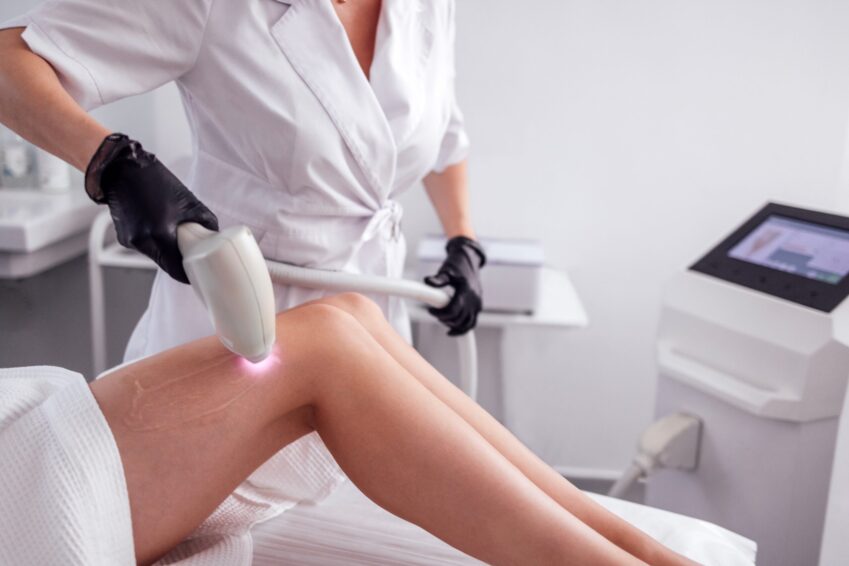
Understanding these myths requires a grasp of the underlying technology. Lasers work by emitting concentrated light energy absorbed by melanin in hair follicles, converting it to heat that impairs regrowth. Advances in diode and alexandrite systems have refined this process, making it suitable for a broader range of users. Despite this, outdated beliefs linger, often amplified through informal channels. The following sections dissect each myth, providing evidence-based clarifications to empower readers with accurate knowledge.
Myth 1: Laser Hair Removal Causes Intense Pain Comparable to Waxing
One of the most frequently cited deterrents to laser hair removal in London is the assumption that it inflicts severe discomfort, akin to the sharp sting of traditional waxing or epilation. This perception stems from early laser devices in the 1990s, which operated without cooling mechanisms and could indeed feel harsh on sensitive areas. However, contemporary systems have evolved significantly, incorporating dynamic cooling devices that spray cryogen onto the skin milliseconds before each laser pulse. This numbs the surface, reducing sensations to a mild warming or rubber-band snap at most.
Clinical studies from the Journal of the American Academy of Dermatology support this shift. A 2022 review of over 1,000 patients undergoing diode laser treatments reported an average pain score of 2.1 on a 10-point scale, far below waxing’s typical 7.5. In London’s bustling clinics, practitioners often apply topical anaesthetics for those with lower tolerance, ensuring sessions remain tolerable even during peak times like pre-summer rushes.
The myth persists partly due to anecdotal exaggeration on social media, where users describe experiences from outdated equipment. In reality, factors like hair coarseness and treatment area influence sensations more than the procedure itself. For instance, underarm sessions might feel negligible, while bikini line treatments could require brief pauses. London’s diverse clientele, including professionals commuting via the Tube, benefits from quick 15-30 minute appointments that minimise disruption.
To further debunk this, consider the physiological response: lasers target follicles below the skin’s surface, avoiding nerve endings responsible for acute pain. Post-treatment redness, if any, resembles a light sunburn and subsides within hours, aided by clinic-recommended soothing gels. For those hesitant, trial patches are standard, allowing a low-stakes introduction. This accessibility counters the myth, positioning laser hair removal London as a practical choice for efficient grooming without the ordeal of invasive methods. By prioritising patient comfort, modern protocols ensure the procedure aligns with the fast-paced lifestyles prevalent in the capital.
Myth 2: It Only Works Effectively on Fair Skin with Dark Hair
A longstanding belief holds that laser hair removal is exclusively viable for individuals with light complexions and coarse, dark hair, leaving others—particularly those with olive or darker tones—disqualified. This originates from the principle of selective photothermolysis, where lasers rely on melanin contrast between hair and skin to avoid surrounding tissue damage. Early ruby lasers, calibrated for high contrast, indeed risked burns on pigmented skin, fuelling exclusionary narratives.
Advancements have dismantled this limitation. Nd:YAG lasers, operating at 1064nm wavelengths, penetrate deeper with reduced melanin absorption, making them safe for Fitzpatrick skin types IV-VI. A 2023 study in Lasers in Surgery and Medicine analysed 500 diverse participants, finding 92% efficacy across tones when using hybrid systems like Soprano ICE, which combines multiple wavelengths. In London, where demographic diversity shapes beauty trends, clinics stock versatile devices to accommodate this variety, from South Asian to Afro-Caribbean clients.
The myth’s endurance ties to incomplete information; many encounter it via generic online forums overlooking device specifics. Truthfully, while optimal results favour high contrast, modern protocols adjust pulse durations and fluences for balanced outcomes. For lighter hair, electrolysis supplements, but lasers alone achieve 70-80% reduction after six sessions for most. London’s regulatory bodies, including the Care Quality Commission, mandate skin-type assessments, ensuring ethical practice.
Practical implications extend to maintenance: tanned skin from summer festivals requires delays, but year-round viability persists with sun protection. This flexibility suits the city’s variable weather, allowing consistent scheduling. Debunking this myth promotes inclusivity, encouraging broader adoption of laser hair removal as a democratised service. Users report not just smoother results but enhanced confidence, underscoring the procedure’s adaptability in a cosmopolitan setting.
Myth 3: Permanent Results Occur After Just One Session
Prospects of flawless, hair-free skin post-single treatment lure many, yet the myth that laser hair removal delivers instant permanence misleads expectations. Hair growth cycles—anagen (active), catagen (transition), telogen (resting)—mean only 20-30% of follicles are active at any time, necessitating multiple passes to target all. One session typically yields 10-25% reduction, with full effects unfolding over 4-6 weeks as dormant hairs shed.
Evidence from the British Journal of Dermatology corroborates this: a longitudinal trial of 300 subjects showed 75% permanent reduction after 6-8 treatments spaced 4-6 weeks apart, but zero permanence from isolated sessions. In London’s competitive beauty market, clinics emphasise this phased approach, often bundling packages for cost efficiency. The misconception arises from marketing gloss-overs or confusion with IPL, which offers temporary smoothing.
Realistic timelines align with urban routines; maintenance sessions every 6-12 months sustain results, far outlasting shaving’s daily grind. Factors like hormonal fluctuations in areas like the face may require tweaks, but core permanence—defined as 70%+ non-regrowth—holds for most. This structured process educates users, fostering realistic goals amid the city’s emphasis on sustained self-care.
By reframing expectations, the myth loses power, highlighting laser’s role in long-term management rather than quick fixes. For Londoners juggling work and social commitments, this predictability proves invaluable, transforming a potential disappointment into a reliable enhancement.
Myth 4: Laser Treatments Are Unsafe and Prone to Causing Skin Damage
Concerns over safety dominate discussions, with fears that lasers scorch skin or trigger irreversible harm. Rooted in pre-2000s incidents with unregulated devices, this myth ignores rigorous standards now enforced. FDA-cleared systems feature built-in safeguards like skin-temperature sensors and automatic shut-offs, minimising risks when operated by certified professionals.
A 2024 meta-analysis in Dermatologic Surgery reviewed 10,000+ cases, reporting adverse events in under 1%, mostly mild erythema resolving in 24 hours. Serious complications like scarring occur below 0.1%, linked to non-compliance rather than technology. In London, adherence to EU Medical Device Regulations ensures clinic accountability, with audits verifying operator qualifications.
The narrative persists via sensationalised stories, yet data reveals lasers as safer than chemical peels for pigmentation issues. Pre-treatment protocols—patch tests, avoidance of retinoids—further mitigate issues. For sensitive users, fractional modes deliver gentler energy. This safety profile reassures, particularly for those with conditions like eczema, under medical supervision.
London’s oversight fosters trust, enabling safe integration into routines. Dispelling this myth underscores lasers’ precision, targeting follicles without collateral damage, and positions them as a low-risk beauty investment.
Myth 5: Treated Hair Grows Back Thicker or Darker
Anecdotes abound of post-laser hair appearing coarser, perpetuating the idea that treatments stimulate overgrowth. This optical illusion arises from synchronised shedding: finer vellus hairs emerge first, seeming denser before maturing. No biological mechanism supports paradoxical hypertrichosis; instead, studies attribute perceptions to incomplete cycles.
Research in the International Journal of Dermatology, spanning 2021-2024, tracked 1,200 patients, confirming consistent reduction in calibre and density. Incidence of increased growth hovers at 0.6%, often hormonal or device-misuse related. London’s experts counter this with follow-up imaging, demonstrating progressive thinning.
The myth’s traction via word-of-mouth delays uptake, yet evidence affirms lasers’ inhibitory effects on follicle stem cells. For consistent results, adherence to schedules is key, suiting the disciplined ethos of city dwellers. This clarification encourages persistence, revealing smoother, finer regrowth where it occurs.
Myth 6: It’s Far More Expensive Than Traditional Hair Removal Methods
Budget comparisons often deem laser hair removal prohibitively costly upfront, ignoring lifecycle savings. Initial courses range £150-£400 per area, versus waxing’s £20-£50 monthly. Over five years, lasers amortise to £5-£10 per session equivalent, per a 2023 Cost-Effectiveness Analysis in Aesthetic Surgery Journal.
In London, competitive pricing and financing options—spreading costs over instalments—enhance accessibility. Myths overlook intangible gains: time saved from razors, reduced irritation expenses. For frequent groomers, ROI materialises swiftly.
This economic rationale appeals to pragmatic users, debunking extravagance notions. With scalable packages, laser hair removal London emerges as a shrewd, enduring choice amid rising living costs.
Conclusion: Embracing Informed Choices in Laser Beauty
Clarifying these myths equips individuals to approach laser hair removal with confidence, leveraging its proven efficacy. In London’s dynamic environment, where efficiency underpins daily life, such treatments offer practical advancements. Consulting accredited providers ensures personalised paths, maximising benefits while minimising drawbacks. As technology progresses, these options will further integrate into standard care, promoting accessible, effective beauty solutions for all.